The regulated workflow, on record
Healthcare teams need a record a reviewer can re-walk.
Plumbline helps teams capture the evidence around prior authorization, clinical decision support, coverage determinations, and utilization review — so the next compliance question starts with a replayable record, not a scramble through disconnected systems.
Qualifier
Illustrative workflow framing — not a certification, legal opinion, or substitute for your compliance review.
01 · The regulatory lens
Compliance and clinical reviewers are asked for the path, not just the outcome.
CMS, OCR, and OIG questions vary by program and context. The common thread is the request for evidence: what happened, who reviewed it, which controls mattered, and whether the organization can explain the exception.
Use this as a conversation starter — not legal advice.
Can the organization show how a coverage decision was reached, reviewed, and communicated?
Keep the operational record close to the decision instead of treating audit preparation as a separate reporting project.
Can a reviewer trace the data, access path, and human context behind a clinical AI output?
Make provenance and reviewer context visible without implying that a product alone satisfies legal or regulatory obligations.
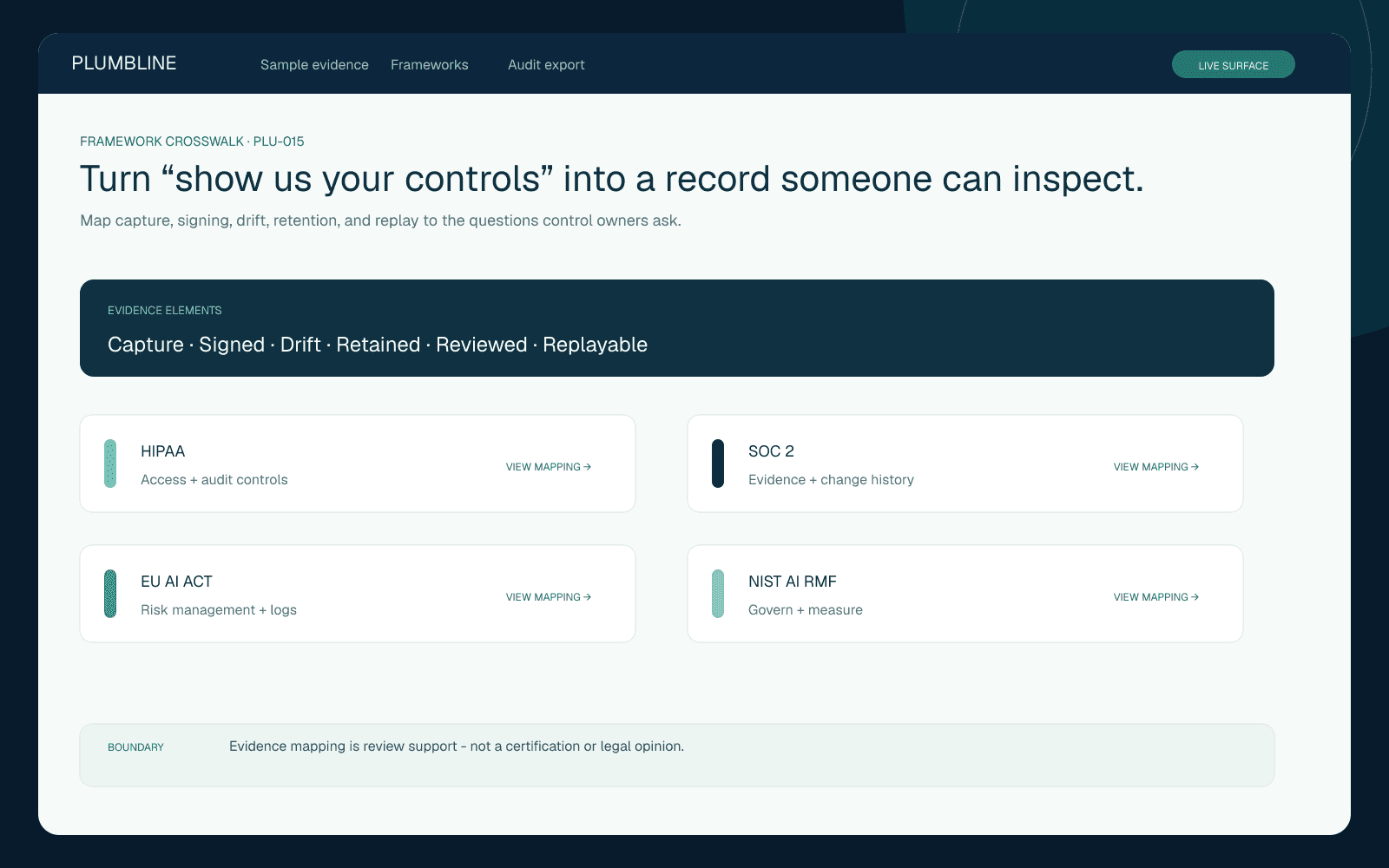
Can the team explain controls, exceptions, and follow-up when a high-impact workflow changes?
Connect the decision record to the evidence and training conversations that help teams investigate what happened next.
02 · The healthcare workflow
From the request in the queue to the evidence a reviewer can defend.
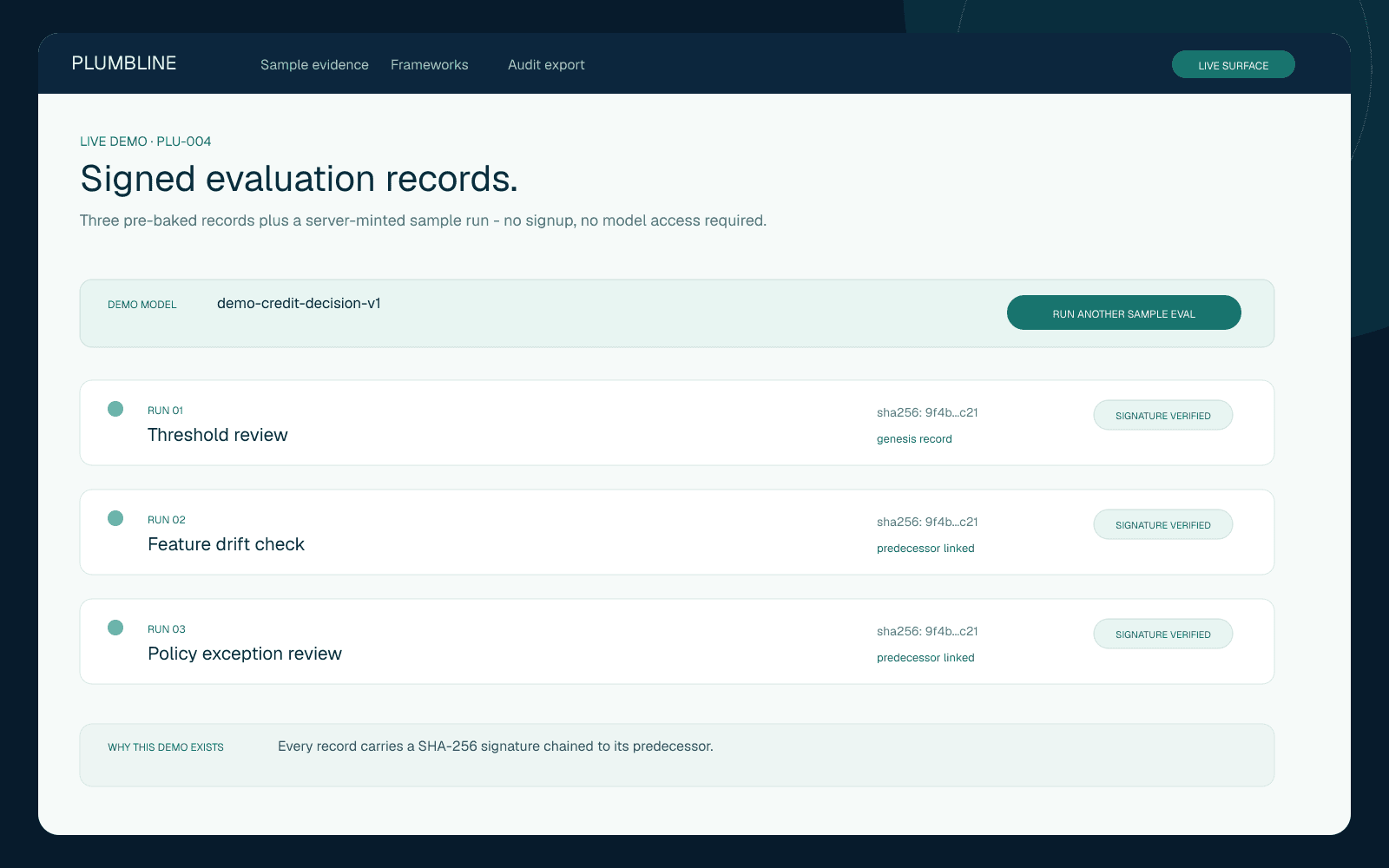
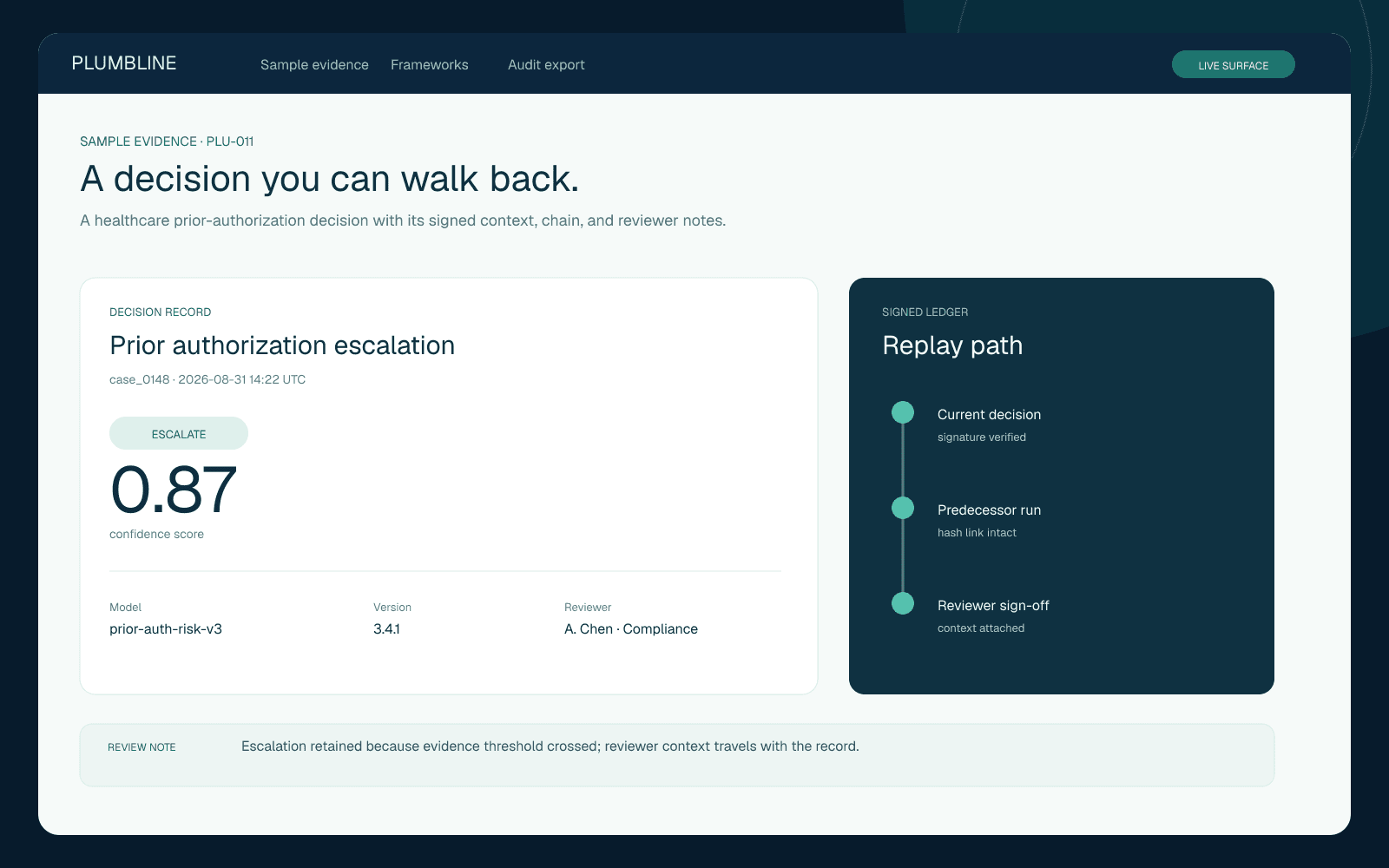
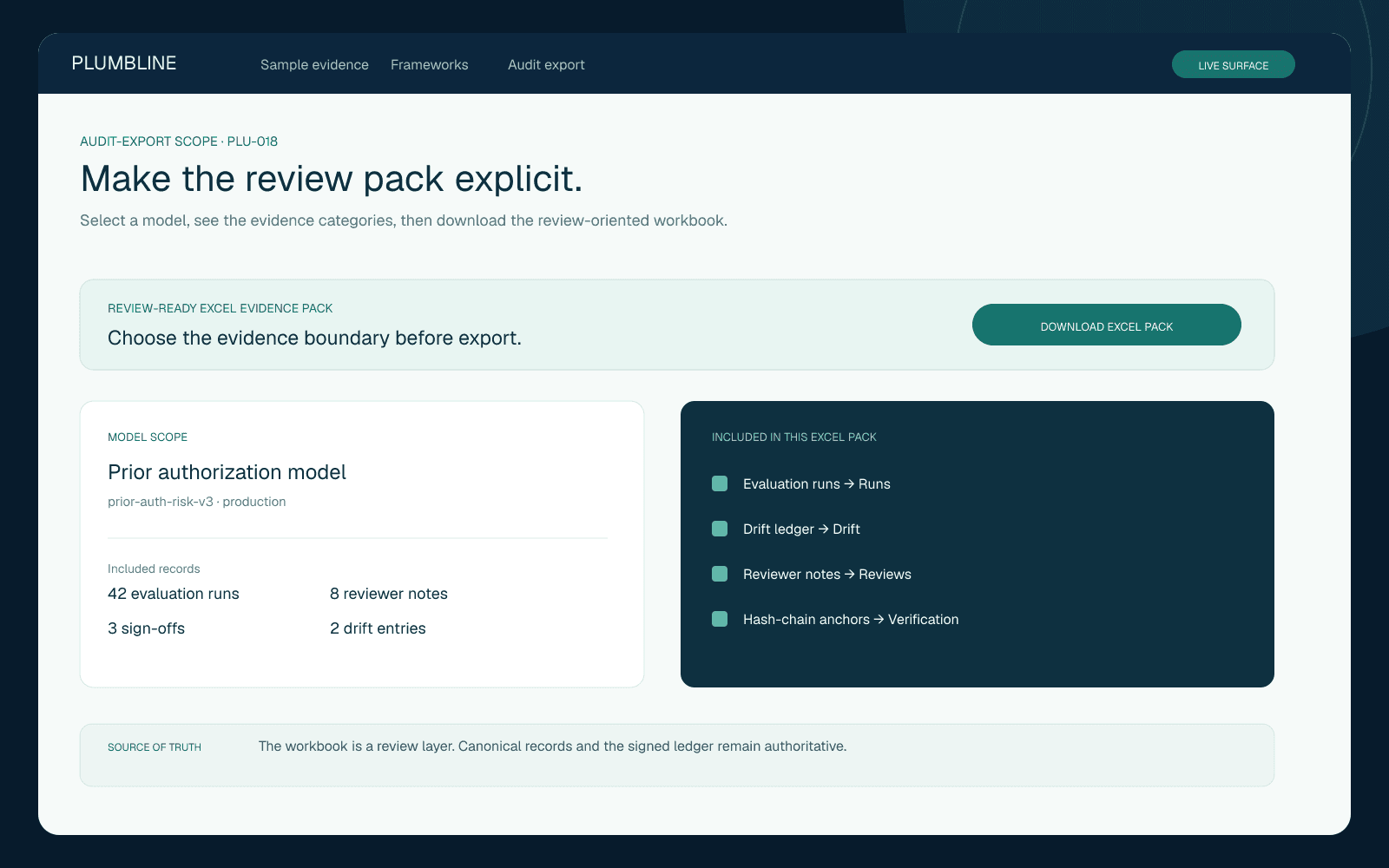
Different teams own different moments. Keep the narrative continuous across the clinical, operational, and compliance handoffs without flattening them into one generic dashboard.
03 · Evidence that survives the handoff
Replayable records for the questions that follow the decision.
The practical test is whether a compliance or clinical operations reviewer can follow the decision without the original builder in the room. Plumbline keeps the record, reviewer context, and exportable handoff close enough to inspect together.
Replay
Walk back from outcome to input.
Context
Keep human review beside model output.
Export
Carry the evidence into the next review.
04 · The compliance conversation
Bring the workflow your compliance team actually has to defend.
Tell us where the evidence path breaks today — prior auth, CDS, coverage review, or utilization management — and we can shape the next conversation around that surface.